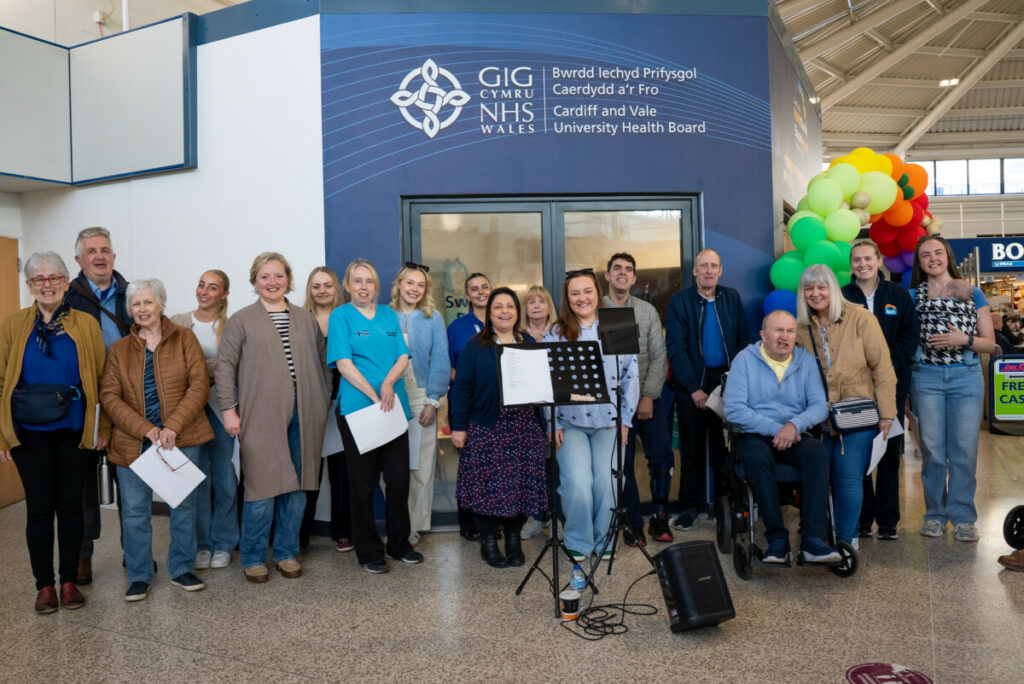
During Stroke Awareness Month, the impact of community support after stroke has never been clearer. Thanks to funding from Cardiff & Vale Health Charity through the Staff Lottery scheme, people affected by stroke are finding connection, confidence and joy again through the Stroke of Harmony Choir.
The choir is part of the wider work of Cardiff Stroke Social Club, a long-standing community group founded over 15 years ago to support stroke survivors and their families. Under the leadership of Chair Dionne Wood, the group has continued to evolve, finding new and creative ways to bring people together and improve wellbeing.
The idea for the choir came from Dionne’s love of music and her desire to offer something different.
To bring it to life, she worked with Nia Tyler, a singer and stroke survivor, who now leads the sessions. Together, they created a space where music could be used not for performance, but for healing, enjoyment and connection.
A Choir With a Difference
The Stroke of Harmony Choir meets once a month at Whitchurch Rugby Sports & Social Club. While it is called a choir, the focus isn’t on perfection or performance. Instead, it provides a relaxed, inclusive space where people can simply come together to sing.
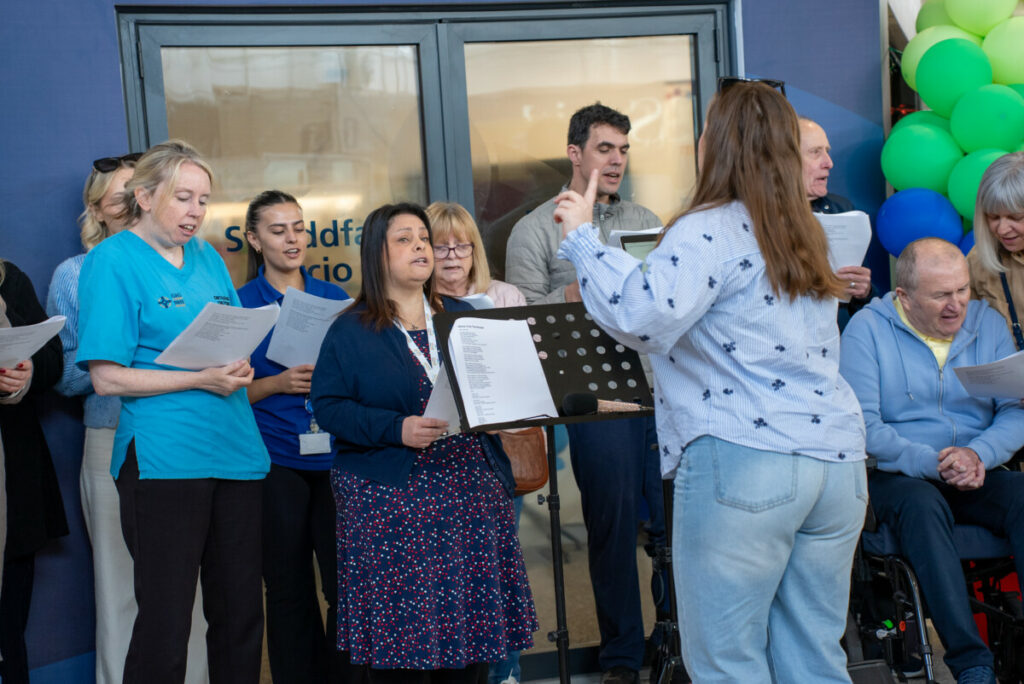
Sessions begin with tea, conversation and laughter — an important chance for people to connect — before moving into gentle warm-ups and familiar songs. The sessions are carefully adapted to ensure everyone can take part, including those living with aphasia. Songs are slowed down where needed, and simple movements help make the experience accessible from both a physical and communication perspective.
The group is open to anyone affected by stroke — survivors, carers, family members, friends and NHS staff working along the stroke pathway.
At its heart, it is about building a sense of community.
A Personal Perspective
For Nia, the choir is deeply personal.
She experienced a stroke in 2019 at just 20 years old while studying psychology at university. With no family history and few risk factors, the diagnosis came as a shock — and was not immediate. Due to the unusual nature of her stroke, it took a week and multiple assessments before it was confirmed.
The experience changed the course of her life.
She chose to pursue music, something she had always loved, and now uses it to support others. Like many survivors, she continues to live with lasting effects, including chronic fatigue, migraines, sensory sensitivities and mild aphasia.
“Sometimes I take for granted that I get to sing,” she reflects. “Not everybody has that opportunity — and after a stroke, people can feel quite isolated.”
Her own experience of music therapy showed her just how powerful singing can be, both emotionally and physically. That understanding now shapes every session she leads.
Small Moments, Big Changes
The impact of the choir is seen in subtle but powerful ways.
As the sessions progress, people visibly relax. Conversations become easier. Laughter builds. Confidence grows.
“You see everyone loosen up,” Nia says. “People start joking, and we all just have a laugh together — even when I get the words wrong.”
For some attendees, the changes are particularly striking. Individuals who were once quiet or withdrawn — including those Dionne had previously seen on hospital wards — are now more expressive, engaging and confident.
Participant Deb said, “I feel like it is a safe place where we can be ourselves, join in and boost our confidence to express ourselves in our own way.”
New members quickly find reassurance in the shared experience of the group. One recent attendee living with significant aphasia felt comfortable enough to talk openly about their stroke, knowing they were surrounded by people who understood and would be patient.
Enrique, a member of the choir said, “I really enjoy singing and Stroke of Harmony is a safe environment where I can sing confidently knowing I won’t be judged and of course being surrounded by the most amazing people I know.”
Supporting Recovery and Wellbeing
The benefits of the choir extend far beyond the sessions themselves.
Singing is known to release endorphins, helping to boost mood and reduce stress. For stroke survivors, it also supports rehabilitation, particularly in areas such as speech and communication. Because music is processed in a different part of the brain to speech, it can provide an alternative and often more accessible route for expression.
One grateful member said, “Barri loves singing and feels he’s got his voice back when doing so. We love the friendly and happy vibe that everyone has. Those two hours are the best!”
The emotional impact is equally important.
Stroke can bring profound changes — not only for the individual, but also for those who care for them. For carers, the choir offers a moment of relief and a chance to reconnect with the person they know and love.
“It was the first time that I really saw Mike come to life,” said member Rachel. “He thoroughly enjoyed the whole session, even the warm-up exercises. Singing along, tapping his feet, he remembered the words to the songs that can be difficult in everyday life. Seeing Mike that animated made me feel so happy. It brought happy tears. It wasn’t just the effect of the session, we sang the song for a few days later too.”
The Difference Funding Makes
Charitable funding has been essential in making the Stroke of Harmony Choir possible.
Through the support of Cardiff & Vale Health Charity, the group has been able to:
- Provide regular, structured sessions
- Offer professional music leadership
- Ensure accessibility with specialist input
- Create a safe and welcoming community space
At a time when community-based stroke support services are limited, initiatives like this are not just valuable, they are vital.
Looking Ahead
Although still in its early stages, the Stroke of Harmony Choir is already making a meaningful difference. What began as an idea has grown into a supportive, welcoming community where people feel understood, included and uplifted.
There are hopes to continue building this community, bringing more people together through a shared love of music and a shared understanding of life after stroke.
“What I find amazing at Stroke of Harmony is to hear voices sing words that they can’t normally remember. It is a wonderful sound to hear.”
Thanks to charity funding, people affected by stroke are not only finding their voices again, they are rediscovering confidence, connection and joy.